How to roast mixed vegetables so they finish cooking together
· Editorial team sacramentonewsdaily7.com
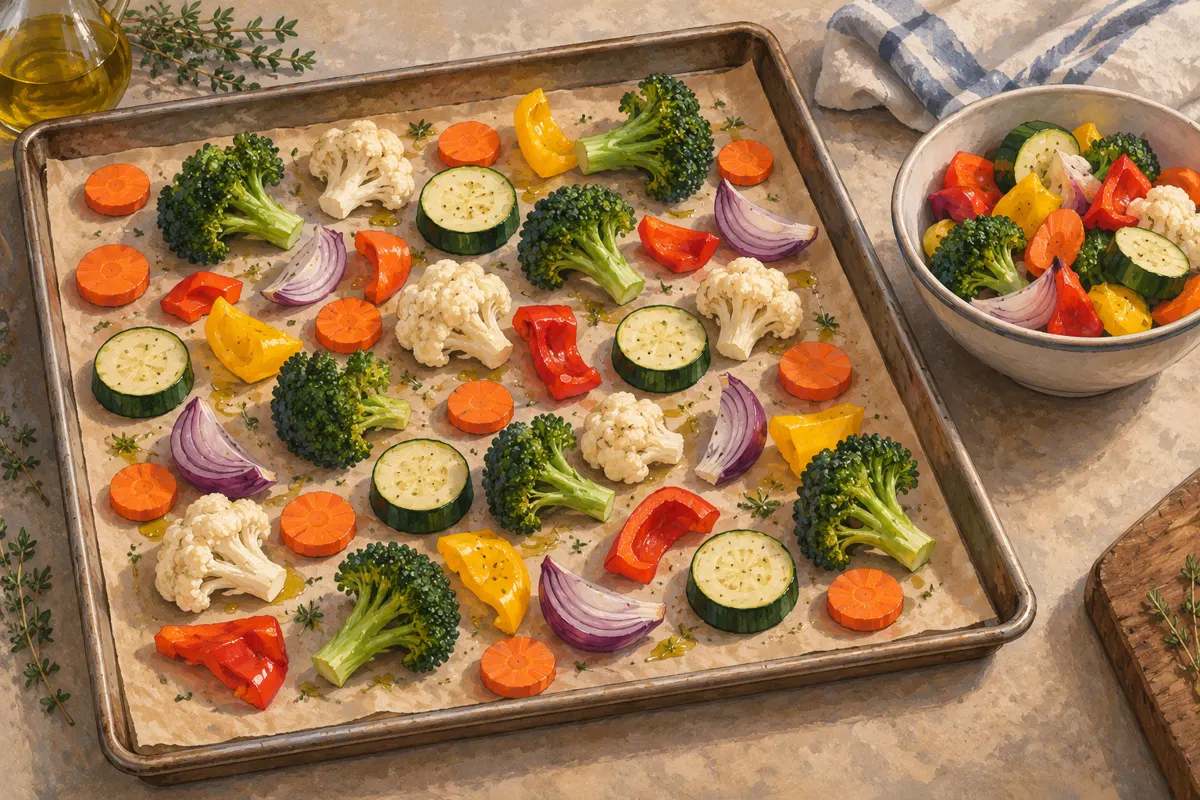
To roast mixed vegetables so they finish together, cut slower-cooking vegetables smaller, keep quicker-cooking vegetables in larger pieces, and give the slowest ones a head start when needed. Spread everything in a single layer with space between pieces. At 425°F, check for tenderness and browned edges rather than expecting every combination to follow the same timer.
Group vegetables by how quickly they cook
Before chopping, decide whether your vegetables can reasonably share a cooking time. The supplied recipe combines broccoli, cauliflower, zucchini, bell peppers and red onion, with cuts chosen to help them roast together. Adding a slower-cooking vegetable, such as carrots, calls for a change in size or a separate start.
Think about the actual pieces, not just the vegetable names. A thin carrot slice behaves differently from a thick chunk, and separated onion petals cook differently from a substantial wedge. Similar dimensions are a useful starting point within each vegetable, but different vegetables may need different cuts.
- For a straightforward mix, use broccoli, cauliflower, zucchini, peppers and onion.
- For carrots mixed with quicker vegetables, choose thin slices or give the carrots a head start.
- If you want large pieces of a slower-cooking vegetable, plan to add the quicker vegetables later.
Adjust the cuts before adjusting the timer
Cut each vegetable consistently so one batch does not contain both tiny scraps and large chunks. Then make deliberate adjustments between vegetables: smaller or thinner cuts for slower pieces, and larger cuts for those likely to finish sooner. This gives you a better chance of cooking the whole tray together.
- Carrots: use thin slices when pairing them with quicker-roasting vegetables.
- Onions: separate into petals when you want them to cook faster.
- Broccoli: keep the floret heads fairly substantial; very small heads can burn before the other vegetables finish.
- Zucchini: cut thick rounds rather than paper-thin slices.
- Peppers and cauliflower: keep pieces consistent within each vegetable.
For reference, the source recipe uses zucchini rounds about 3/8 inch thick, pepper and onion pieces about 1½ inches across, and florets about 2 inches long. These are useful starting dimensions for that particular combination, rather than a universal cutting rule.
Give slower vegetables a head start
Staggering additions is a practical editorial proposal for combinations that cannot easily be balanced through cutting alone. Start the slower vegetables first, then add the quicker ones to the same tray if there is enough room. Keep the later additions ready in a separate bowl so you can coat and add them without mixing them into the first batch prematurely.
- Preheat the oven to 425°F. Toss the slower vegetables with oil, salt, pepper and your chosen seasonings.
- Spread them on the baking sheet, leaving room for the vegetables you will add later.
- Check their progress before adding the quicker pieces. The first batch should have begun softening but still need further cooking.
- Add the remaining vegetables, lightly coated with oil and seasoning, and spread everything back into one layer.
- Continue roasting and checking both groups. Remove any pieces that finish early.
Leave enough space for browning
A crowded tray can undermine careful cutting and timing. Vegetables packed tightly together tend to steam, leaving you with softer pieces and less browning. Use a large baking sheet and arrange the vegetables so each piece touches the pan. Avoid piles and overlapping layers.
Toss with enough oil to coat the vegetables evenly, then spread them out. If the tray is full before you add the second group, use another baking sheet. When roasting on two racks, swap the pans halfway through. Separate pans also make it easier to remove a quicker-cooking batch while the slower one continues.
Check each vegetable before serving
For the source recipe’s broccoli, cauliflower, zucchini, pepper and onion mix, the suggested roasting schedule is 15 minutes, followed by a turn or toss and another 8–15 minutes. Treat that as a starting range for those cuts. Changing the vegetables or their size can change the time needed.
When checking the tray, sample a piece of each vegetable, including one of the largest slower-cooking pieces. Look for tenderness as well as browned edges. Turn the vegetables during cooking, then restore their spacing. If one type is ready, transfer it to a serving dish and let the rest finish. The goal is a well-cooked mixture; removing a few early pieces is a useful final adjustment.